
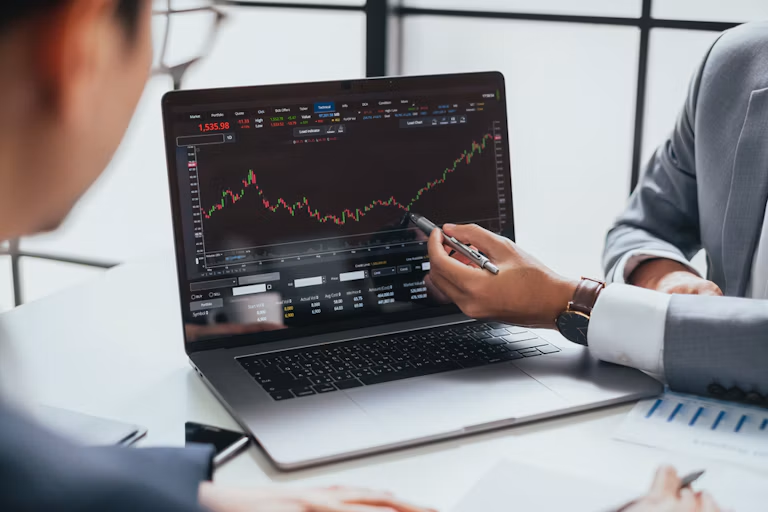
Financial markets rarely move in perfectly predictable ways. Economic reports, central bank decisions, geopolitical developments, and changing investor sentiment can all influence asset prices, sometimes with little warning. For investors and traders, these conditions create a challenge: strategies that work well during stable periods may become less effective when uncertainty increases. Flexibility, therefore, is an important part of navigating changing market environments while maintaining a disciplined approach to risk.
Rather than attempting to predict every movement, successful market participants focus on preparing for different outcomes. They understand their objectives, evaluate the risks associated with their positions, and adjust their decisions when circumstances change. This approach does not eliminate uncertainty, but it can help traders respond more thoughtfully to unexpected developments and avoid making decisions driven by fear or excitement.
Understanding Why Markets Become Unpredictable
Market uncertainty often increases when economic conditions change rapidly. Inflation figures, employment data, interest rate announcements, and corporate earnings can all influence expectations about future growth. When new information challenges existing assumptions, investors may reassess valuations, leading to sudden price movements across stocks, bonds, currencies, and commodities.
External events can add another layer of complexity. Political developments, international conflicts, supply chain disruptions, and unexpected corporate announcements may affect individual assets or entire markets. Even when the broader economic outlook appears relatively stable, these developments can trigger volatility. Traders who rely on a single market forecast may struggle when conditions no longer support their original assumptions.
Unpredictability also affects market psychology. When prices rise sharply, investors may become overly confident, while sudden declines can encourage panic selling. Both reactions can undermine sound decision-making. Recognising that market movements are influenced by both measurable economic factors and changing sentiment helps traders remain cautious, question their assumptions, and prepare for several possible outcomes instead of relying on one expected direction.
Why Flexibility Is Essential to Trading Decisions
A flexible trading strategy allows market participants to respond to new information without abandoning their underlying principles. This distinction matters because flexibility does not mean constantly changing positions or chasing every price movement. Instead, it involves identifying the conditions under which a strategy remains valid and recognising when those conditions have changed. Traders can then adjust their exposure, review their expectations, or remain on the sidelines until a clearer opportunity emerges.
Different market environments may also favour different approaches. During periods of steady growth, directional strategies may appear attractive because price trends are relatively clear. When markets move sideways or experience sharp fluctuations, other approaches may deserve consideration. Understanding the relationship between market conditions, potential returns, and possible losses enables traders to make decisions that reflect the circumstances rather than forcing the same strategy into every situation.
Options trading illustrates how flexibility can be incorporated into a broader trading plan. Options provide the right, but not the obligation, to buy or sell an underlying asset at a specified price within a defined period, depending on the contract. Traders exploring how to trade options UK can learn how calls, puts, strike prices, expiration dates, and premiums influence potential outcomes. However, options involve additional risks, including time decay and changes in implied volatility, so understanding the mechanics is essential before committing capital.
Managing Risk When the Outlook Is Unclear
Flexibility becomes particularly valuable when uncertainty makes potential losses harder to estimate. A trader may have a strong view about a company’s prospects but still face unexpected price movements caused by broader market conditions. Managing position sizes, diversifying exposure where appropriate, and setting clear limits on acceptable losses can help prevent one unsuccessful trade from damaging an entire portfolio.
Risk management should also account for the specific characteristics of each instrument. Options buyers can lose the entire premium paid, while certain options-selling strategies can expose traders to substantial or theoretically unlimited losses. Leverage can magnify both gains and losses, making it especially important to understand the obligations attached to a position. Protective strategies may reduce particular risks, but they rarely remove every possible source of loss.
Another important consideration is liquidity. In unsettled markets, the difference between buying and selling prices can widen, and executing a trade at the expected price may become more difficult. Traders should consider transaction costs, potential slippage, and the possibility that a position cannot be closed immediately on favourable terms. Maintaining sufficient cash reserves and avoiding excessive exposure can provide greater room to respond when market conditions deteriorate.
Conclusion
When markets become difficult to predict, flexibility helps traders remain prepared without sacrificing discipline. By understanding changing economic conditions, evaluating different strategies, managing risk, and learning from previous decisions, market participants can respond more effectively to uncertainty. The objective is not to forecast every movement correctly, but to build a process that remains useful when expectations change.
Long-term trading discipline depends on balancing adaptability with consistency. A clear plan provides direction, while regular assessment allows that plan to evolve as new information emerges. Traders who prioritise informed decisions, realistic expectations, and appropriate risk controls are better equipped to navigate uncertain markets without allowing short-term volatility to dictate every move.